Part 4: Easter Sunday Sermon Map
"THE LOUD SUPPER"
Dominant Thought
Jesus, the Risen One, turns our deep grieving to rejoicing.
Key Passages
John 16:20
John 20:1–20
Introduction
Suggested Approach for the Introduction
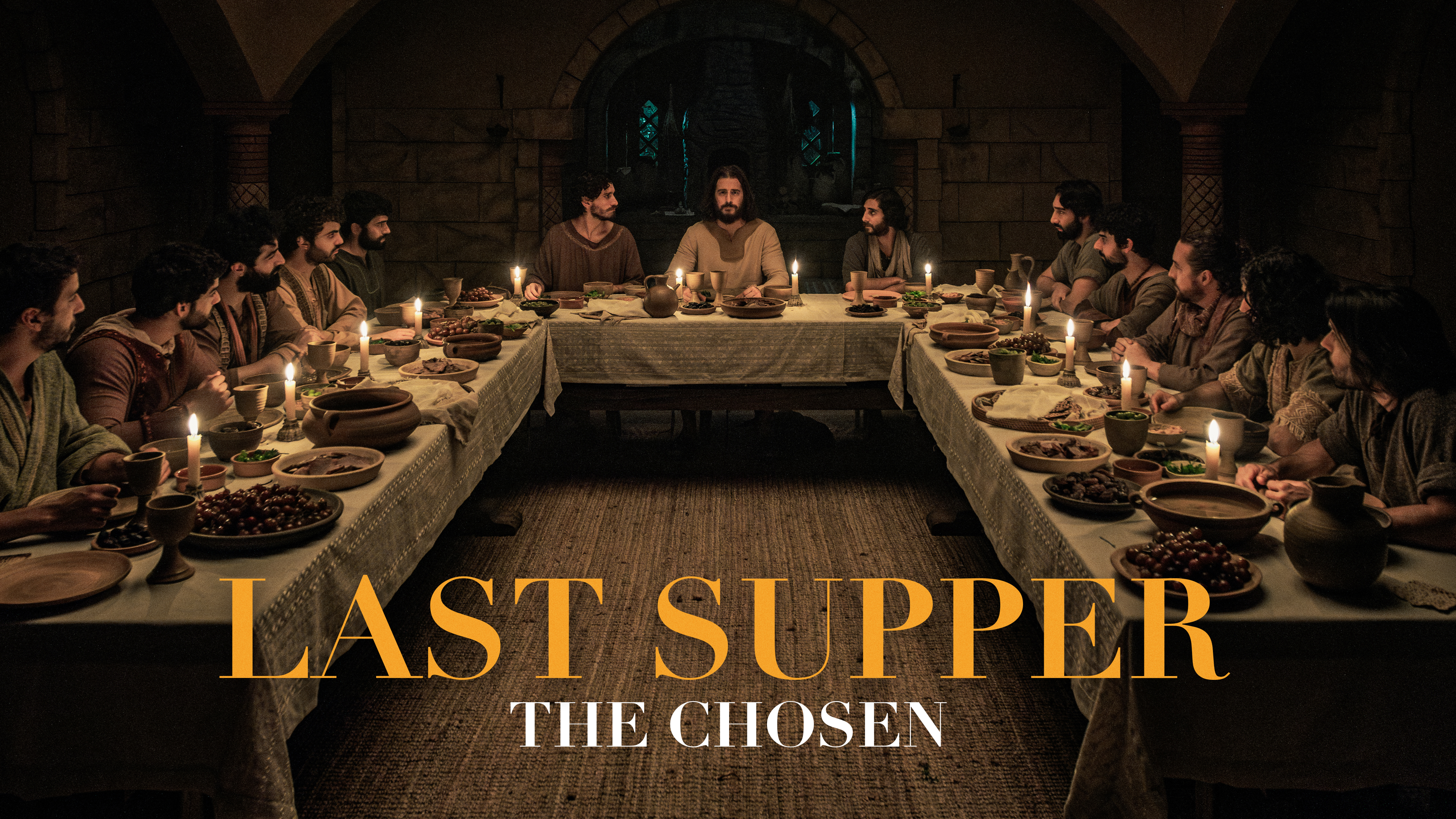
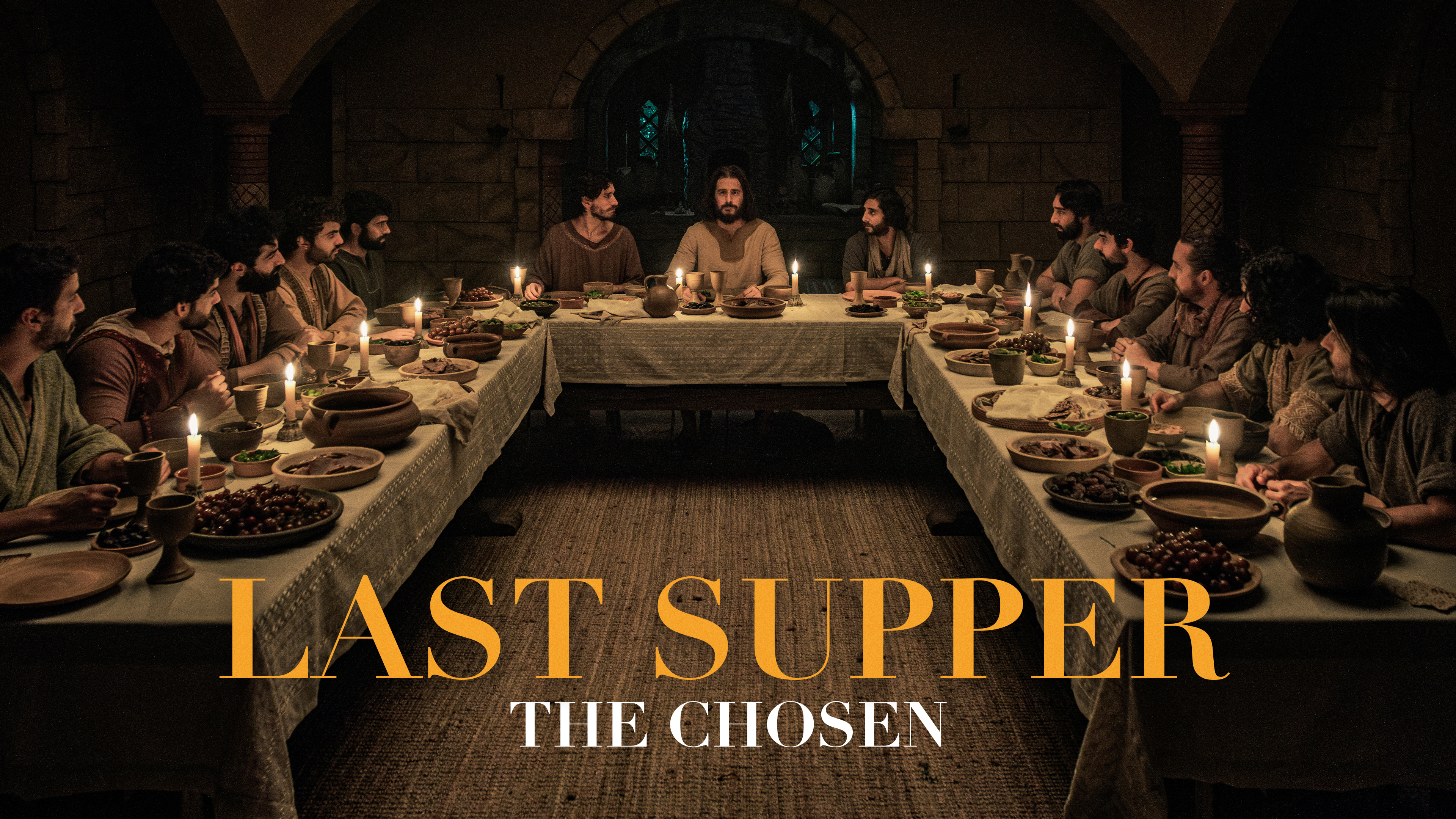
We would suggest starting your sermon by simply showing the clip from The Chosen that’s provided with this sermon map — a clip that depicts the moment in the Upper Room when Jesus speaks the central verse of the sermon: John 16:20.
Transition to Section One
After the clip has faded to an end, you could:
take a moment to remind your listeners that you have been spending the Sundays leading up to Easter in the Upper Room
briefly explain the significance of the Upper Room — notably that (1) it was where Jesus and his disciples celebrated a supper, the Passover meal, as a foundation to what would soon transpire, and (2) it was where Jesus offered a final stretch of teaching to his disciples
Once you’ve mentioned that second point — that the Upper Room was where Jesus offered a final stretch of teaching — you could say something like this to establish the first suggested teaching point of your sermon, which will be built upon in Section One: “When Jesus speaks of grieving being turned to rejoicing, he’s speaking of a work God has been up to since the very beginning...”
Section One
Suggested Teaching Point for Section One
This has been the work of God since the beginning — to turn our grieving to rejoicing.
Suggested Approach for Section One
Just after you’ve stated the first suggested teaching point of the sermon, have some fun via a passionate survey of the history of God doing this great work. To start, you might want to say something like this — “and when I say this has been the work of God since the beginning, I quite literally mean the beginning” — because you really should start with the story of Adam and Eve.
Share with your listeners how the first story we’re given in the Scriptures is a story shot through with grief — a story that establishes what will be the story of humanity (one of steady grief due to what we’ve done or have had done to us). But this first story ends with a promise that God will turn such grieving to rejoicing (Genesis 3:15).
This establishes what will be the story of God and humanity together (one of grieving being turned to rejoicing). From there, then, have at it with your survey.
We’d encourage you to consider dancing in and out of smaller-scale and larger-scale stories of God turning grieving to rejoicing. You’ll probably want to shine a light on the story of Abraham and Sarah grieving their inability to conceive, which gives way to a sudden pregnancy, even in their old age. And perhaps you could quickly point to Jacob or Joseph, Esther or Ruth, David or Elijah — and certainly Job.
But go larger-scale, too. Point to the story of the Flood. Point to Israel crying out for deliverance from slavery in Egypt — and then her deliverance. Point to moments in her wilderness wanderings. Point to the era of God’s judges. Circle back to that string of disappointing kings that you mentioned in the previous week’s sermon — how they left Israel in Exile. And then speak of her return.
Throughout your survey, use the first suggested teaching point as a refrain: This has been the work of God since the beginning: to turn grieving to rejoicing.
Up to this point, you will have only covered stories from the Old Testament. You’ll obviously want to transition to stories from the gospel accounts.
Here, too, is an opportunity to have some fun via a passionate survey of the history of God turning grieving to rejoicing through Jesus. For purposes of this sermon, we’d encourage you to focus on stories from the Gospel of John of healing, reconciliation, forgiveness, and so forth. Just as John does in his gospel account, you’ll want to build toward the story of the resurrection of Lazarus.
And just as you did when surveying stories from the Old Testament, throughout these stories from the Gospel of John, use that refrain: This has been the work of God since the beginning: to turn grieving to rejoicing.
To close out this first section of the sermon, it will serve you well for purposes of application later in the sermon to add this thought: “This work usually took some time. It often meant some loss. And it always had some mystery mixed in. But throughout the Old Testament and on into the unfolding story of Jesus, there was God, ever and always turning grieving to rejoicing.”
Extended Transition to Section Two
Right after you offer that additional thought we’ve suggested above, it’s time to circle back to the scene that was shown at the start of the sermon (and the text on which it is based).
“All of this brings us to the Upper Room late on a Thursday night, and those words from Jesus: ‘Very truly I tell you, you will weep and mourn while the world rejoices. You will grieve, but your grief will turn to joy.’ Jesus knows, of course, what’s about to happen — that he will be struck down.
And while his disciples are struggling to hear, let alone comprehend, let alone believe, what Jesus has said is about to happen to him, it has to be nagging at them — the possibility that their Teacher, their friend, is about to meet his end.
And into this darkness of that Thursday night, Jesus audaciously says, ‘You are about to enter into such grieving. And your grieving will be made all the deeper when the world is rejoicing over what you are grieving. Their rejoicing will increase your grieving because their rejoicing might have you believing that there is good reason to be grieving. But your grieving will be turned to rejoicing.’
And then onward he marched to his death on that Friday. And I wonder what it was like for the disciples throughout that Saturday and on into the early hours of that Sunday...
And from there, imagine the scene aloud. Help your listeners understand that on Saturday and on into those early hours of Sunday, the disciples were back in the Upper Room. Imagine how it surely was quiet, except for the sound of weeping — the sound of grieving.
And this is key: wonder aloud if there in the Upper Room on that Saturday and on into the early morning hours of that Sunday the words from Thursday echoed back to them: ‘Very truly I tell you, you will weep and mourn while the world rejoices. You will grieve, but your grief will turn to joy.’
Wonder aloud as to whether or not maybe, just maybe the disciples spoke those words of Jesus to themselves and to one another, again and again: ‘Your grief will turn to joy. Your grief will turn to joy. Your grief will turn to joy. Your grief will turn to joy.’
Wonder aloud as to how they had to have been grieving and trying to be believing, grieving and trying to be believing, grieving and trying to be believing, before you simply say, ‘And then.’
As for what you do next? There’s really only one thing to do, and one thing you should do: simply read the resurrection account as found in John 20:1–20 (either in its entirety or in part).
And then? It’s time to transition to Section Two of the sermon by restating the suggested teaching point for Section One, before building to the dominant thought:
“This has been the work of God since the beginning: to turn grieving to rejoicing. And this was the work of God at Easter: to turn grieving to rejoicing. And this has been the work of God since the new beginning of Easter — to turn our grieving to rejoicing.
In the first sermon in the series, we agreed that Jesus, the Bread of Life, satisfies our deep hunger. And then we agreed on Palm Sunday that Jesus, the King of Kings and Lord of Lords, wins our deep battles. Today, we agree: Jesus, the Risen One, turns our deep grieving to rejoicing.”
Section Two
Suggested Teaching Point for Section Two
Jesus, the Risen One, turns our deep grieving to rejoicing.
Suggested Approach for Section Two
To begin this section of the sermon, you’ll want to explain that while the death, burial, and resurrection of Jesus was the key moment of God’s work in turning humanity’s grieving to rejoicing — in that, “as we’ve discussed earlier in our series, it was the moment humanity’s enemy, sin, and humanity’s greatest enemy, Death, were defeated” — it was not the end of God’s work of turning our grieving to rejoicing.
Help your listeners understand that God is keenly aware that the inner- and outer-workings of a long history of sin, death, and evil’s influence run far and deep and require much work and much witness. Victory is being worked out — its reach being extended.
If you don’t feel the illustration is too played-out — and for any visitors in your midst on Easter Sunday, they will have never heard the comparison and it might prove quite helpful for them — you could explore that difference between a military campaign’s D-Day and its V-Day.
(This resource is being published in 2025, which will see the 80th anniversary of WWII’s V-Day. In 2024, WWII’s D-Day saw its 80th anniversary.)
A ‘D-Day’ is set apart as a day in which a major action is undertaken that has potential to change the course of a war. Well beyond the ‘D-Day,’ is a ‘V-Day’ — a day in which the enemy surrenders and victory is finalized and complete.
Easter is a sort of D-Day — a new beginning that has changed the course of the searing work from grieving to rejoicing — and V-Day rests beyond. And God continues his work to bring that end about.
There are other illustrations you can use, of course. Just one example: a new day is marked as having started in the dark of midnight, and over time, light stretches and reaches into every corner. Day has come, but all of its effects have yet to be realized in the early hours.
Whatever illustration you choose to play with, you can allow it to lead you along to the suggested teaching point for this section of the sermon, saying, “And so this has been the work of God since the new beginning of Easter — to turn our grieving to rejoicing.”
And once you’ve stated it, you can add: “And this has been his work, hasn’t it? Think with me...”
At this point, you can mirror the survey work you did in Section One, having some fun via a passionate survey of the history of God turning grieving to rejoicing in the early church and beyond.
As before, we’d encourage you to consider dancing in and out of smaller-scale and larger-scale stories of God turning grieving to rejoicing. Point to the story of Peter’s restoration. Point to Paul’s conversion. Point to healings that took place in the earliest days of the church. Point to the beauty of the breakthrough experienced by the Ethiopian eunuch or the Philippian jailor.
But go larger-scale, too. Point to the thousands who cried out to be saved at Pentecost in Jerusalem. Point to the Gospel reaching Gentiles who were desperate for Good News. Point to the Gospel going to distant lands never before reached by even the Jewish faith of old. Point out how a map of the reach of the early church matches and surpasses the reach of the Roman Empire itself.
Point out that just as the prophet of old promised, a light came to those who walked in darkness. And just as you did in Section One’s survey, throughout your survey, use the Dominant Thought as a refrain: Jesus, the Risen One, turns our deep grieving to rejoicing.
Up to this point, you will have only covered stories from the earliest days of the church. You could explore key moments in which God turned grieving to rejoicing throughout church history (beyond what is recorded in the Book of Acts).
Play as much as you want. What’s key, though, is that you should absolutely leave ample time for you to explore stories of how God has turned grieving to rejoicing within your congregation.
We cannot possibly identify those stories for you, but as a pastor, you know these stories, and to whatever degree it is appropriate and helpful to share some of them, we’d encourage you to share them. And as you do, use the Dominant Thought as a refrain: Jesus, the Risen One, turns our deep grieving to rejoicing.
And then finally, bring it all within the world of the individual who is listening to you:
“I do not know if you — yes, you — are shut up within some Upper Room and the day is Saturday and you wonder over and about the work of God. Will he turn this grieving to rejoicing?
What I can say to you is what Jesus said to his disciples in that Upper Room on the Thursday before their own Saturday — and what he said to them, really, on the Sunday after:
‘Very truly I tell you, you will weep and mourn while the world rejoices. You will grieve, but your grief will turn to joy.’
I will tell you what I’ve been saying from the start, proven true again and again by stories of old and stories from today: This is the work of God: to turn our grieving to rejoicing.
His work usually takes some time. It often means some loss. And it always has some mystery mixed in. But God is ever and always turning grieving to rejoicing.”
Transition to Conclusion
To transition to the Conclusion, you need only pause for a moment after the last line above, before stating the final suggested teaching point of the sermon:
“And one day, the work of God will have been completed and there will be an ending to our grieving altogether.”
You could add this thought: “It will be all rejoicing and no grieving.”
Conclusion
The series we’ve laid out before you is titled “The Last Supper,” and throughout these maps we’ve played off of the imagery of a supper or a meal — even in the sermon’s titles.
When we set out to create this series, we always had in mind that we wanted to encourage you to end the entire journey with a short, but cogent look at that final wedding supper that’s mentioned in another of John’s writings: the Book of Revelation (see 19:6–9).
Just after you’ve offered the suggested teaching point for the Conclusion — one day, the work of God through Jesus will have been completed and there will be an ending to our grieving altogether — you could pause before you say something that echoes what we’ve just now written to you:
“Throughout this series titled ‘The Last Supper,’ I’ve played off of the imagery of a supper or a meal — even in the sermon’s titles. The Least Supper. The Lord’s Supper. The Last Supper.
For this sermon? I went with ‘The Loud Supper.’ Why? Because I’ve always wanted to end this series with a nod to a supper mentioned in another of John’s writings. It’s in the Book of Revelation. It’s a supper mentioned at the end of all things.
Let me tell you about it, by reading about it for you. From Revelation 19, verses 6 through 9...”
Once you’ve read the passage, explain to them just a bit about the beauty of this imagery: we are wed to Christ, and thus to God, and in it all, heaven and earth are once again wedded together.
And so there’s a supper in celebration — and tell your listeners that you have to think it’s going to be a loud supper.
Because the old has gone and the new has come. Because the work God has been doing since the beginning, and since the new beginning, has been completed.
Because now there is only rejoicing, because now there is no more grieving, because now there is no more suffering.
We would suggest you even take a moment to simply read Revelation 21:1–4.
And once you have, make your way through all the teaching points of the sermon before a final prayer:
This has been the work of God since the beginning — to turn our grieving to rejoicing.
This has been the work of God since the new beginning of Easter — to turn our grieving to rejoicing.
Jesus, the Risen One, turns our deep grieving to rejoicing.
And one day, the work of God through Jesus will have been completed and there will be an ending to our grieving altogether.