Part 1: Pre-Palm Sunday Sermon Map
"The Least Supper"
Dominant Thought
Jesus, the Bread of Life, satisfies our deep hunger.
Key Passages
John 13:21b-30
John 6:1-15 and John 6:25-71
Exodus 16
Introduction
Suggested Approach for the Introduction
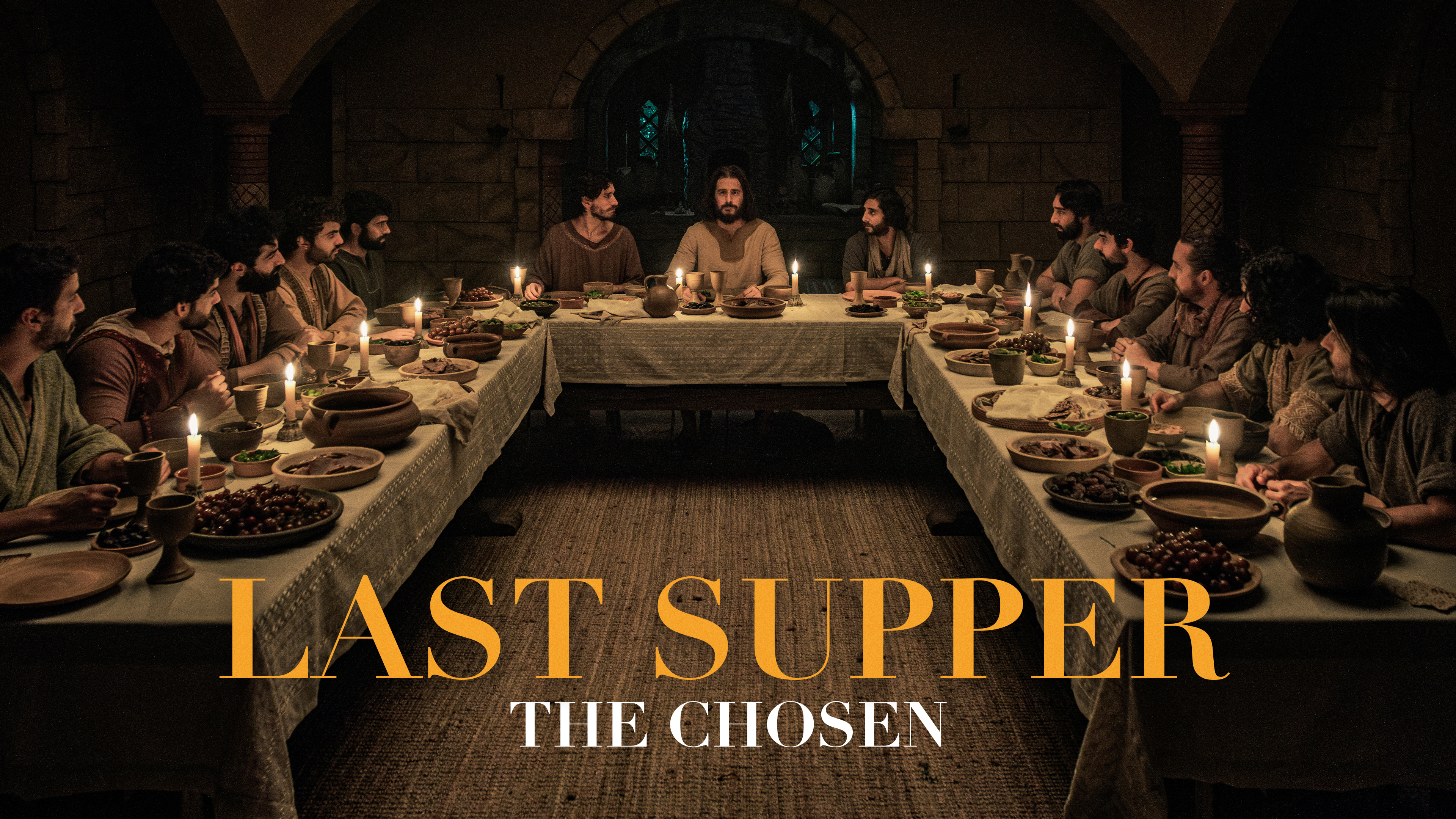
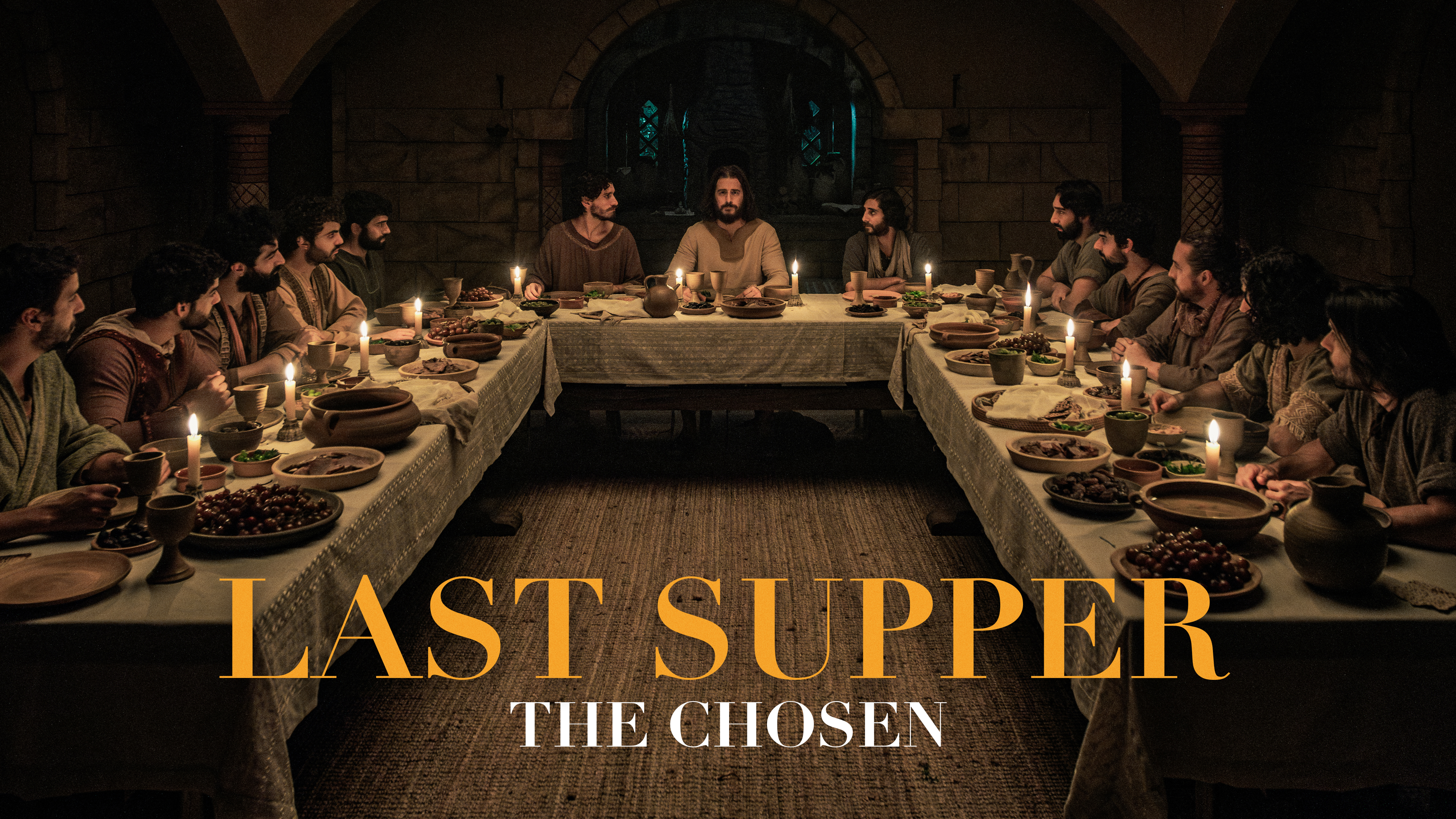
We would suggest starting your sermon by simply showing the clip from The Chosen that’s provided with this sermon map — a clip that depicts the moment Jesus confronts Judas over his plans to betray him.
Transition to Section One
When the clip has come to an end and a bit of silence has filled the room, you can say something as simple as this (in our words or your own): “It’s a question that nips at my heels every time Easter rolls around; perhaps it nips at yours, too: why on earth would Judas do what he did? Why would he betray — give away — Jesus? It’s certainly a question that’s nipped at the heels of scholars for centuries, and they’ve come up with no shortage of answers:
Judas was trying to force Jesus’s hand at kickstarting a political revolution.
Judas was consumed with anger over how Jesus was carrying out his ministry.
He was simply fated for such a role.
He was possessed by evil.
“You can gamely argue for any one of those. You can gamely argue for a combination of one or two or even all of them. But there’s one I’ve not mentioned that’s staring us right in the face, and it’s the one I want to explore in our time together. And to do that, we have to move from one meal — the one that was taking place in the clip we just watched (the Last Supper in the Upper Room) — to another meal that happened much earlier in Jesus’s ministry...”
Section One
Suggested Areas of Study for Crafting Section One
John 6:1-13 (the Feeding of the 5,000)
Exodus 16 (the feeding of Israel in the wilderness)
John 6:14-15 and John 6:25-42 (the 5,000 seeking more bread from Jesus)
John 6:66-71 (the rejection of Jesus by the 5,000/the renewal of commitment to
Jesus by the disciples)
A scriptural survey of key gospel passages concerning Judas
Suggested Approach for Section One
To begin this section of the sermon, we’d suggest you either (1) read as much of John 6:1-13 as you like, offering commentary along the way that’s born out of your study, or (2) tell the story of John 6:1-13 in your own words (with commentary).
Along the way in your reading or retelling, be sure to establish for your listeners how this miracle would have stirred memories in the men, women, and children of the moment in ancient Israel’s life when God fed her with manna each day as she made her way to the Promised Land. To whatever degree you wish to read (or retell) the events recorded in Exodus 16 is entirely up to you, of course. The key is to build that critical bridge between John 6 and Exodus 16. Once you’ve built that bridge between Old Testament and New, it’s time to either (1) read as much of John 6:14-15 and 25-42 as you like, offering commentary along the way that’s born out of your study, or (2) tell the story of John 6:14-15 and 25-42 in your own words (with commentary).
Along the way in your reading or retelling, be sure to point out to your listeners:
the crowd begins to realize what they might have in Jesus — someone to fill their tables
and cupboards and bring along prosperity (vv. 14-15)
Jesus knows exactly what they are thinking and departs from them (v. 15)
when the crowd finds him, Jesus still knows what they’re seeking — someone to fill their
tables and cupboards and bring along prosperity (vv. 25-26)
Jesus tells them again and again that they need far more than bread — that they need him
(vv. 27-40)
again and again, the crowd either directly or indirectly asks for mere bread (vv. 27-40)
After you’ve made your way through these verses, the time has come to drop in the suggested teaching point for this section of the sermon. You could even do so in the form of a question: “We all have a deep hunger for the bread of this world, don’t we? The things and the stuff of this world?”
Once the suggested teaching point is stated, explore it with your listeners. Admittedly, this requires walking a bit of a tightrope. When you point to our pursuit of “bread” — our pursuit of the stuff of this world (things like food, clothing, money, a house, comfort, a little peace and quiet) — you really do need to stress two things right off the bat: (1) these are not at all bad things, and (2) these are things we kind of have to pursue (i.e. we can’t go without food, clothing, etc). It’s vital you set your listeners free from any undue guilt for the remainder of the sermon. You could even point out that in verses 1-15, when the 5,000 were hungry and in need of bread, it was not at all wrong (and certainly not at all strange) for them to desire it and for the disciples to desire it for them. We know it isn’t wrong because Jesus meets this need! (And frankly, Jesus meets a lot of different base needs throughout his earthly ministry.) It’s in the latter verses that an issue emerges. You’ll want to say something along these lines: “The issue is that the people want more than they’ve been given. And they want it again and again. And then there is the issue: they only want it. Because they’ve come to believe it is just about all that they need. There seems to be a moment where they desire a different sort of bread. You see it there in verse 34. But that moment is fleeting. Because they are thinking only with their stomachs — thinking only in base terms, thinking only within their flesh and blood, thinking of the here and now, of this life, of what is immediate — and as a result, they have a deep and insatiable hunger for the bread of this world.”
Once you’ve shared the above — as always, in our words or your own — you’ll want to explore what happens next in the story. Read verses 41-42, 60, and 66. Help your listeners see that many turned away from Jesus that day, and it’s because he wouldn’t play by the rules of their stomachs. He was up to a deeper work — he was offering something greater — and the grumbling of their stomachs led to angry grumbling amidst the crowd. (If you think it’s necessary, go deeper on why the people turned from Jesus. Help your listeners see that when we think only with our stomachs, and seek only the bread of this world, two things happen: (1) we lose our bearings altogether on what is needed and what is superfluous, and (2) we grow cold toward God, either because we have what we want and we don’t “need” him, or we have not gotten what we feel we need, so we don’t want him.)
Having said all that needs said about the actions of the crowd, it’s time to move along to verses 66-71 with your listeners. Pause for just a moment before you then say, “And I want to point out that the crowd wasn’t alone in rejecting Jesus that day. It’s easy to miss, because the person who also left Jesus, appears at first glance to stay with Jesus...” You can then simply read verses 66-71. Once they’ve been read, you could say something like this: “Verse 71 is a curious thing, isn’t it? John uses an editorial aside to set apart Judas in particular. There’s a foreshadowing here of the very moment we saw play out in the clip at the start of the sermon, isn’t there? And you can’t help but think about our question: why would Judas betray Jesus? Why would he give him away? And here’s the answer in part — and I think it’s a big part: he thought only with his stomach, and he wanted only the bread of this world. At the end of John 6, the Twelve have a renewal of vows, so to speak. They reaffirm their commitment to Jesus and his deeper work and his greater offering. But as one commentator puts it, John seems to be saying that there among the Twelve is ‘a pretender.’ There among the Twelve is one who merely wants bread — the stuff of this world — and nothing more.”
To close out this section, draw from your survey of the life of Judas to further prove your point about his thinking only with his stomach and his insatiable hunger for the bread — the stuff —of this world. Point to the moment we learn about him helping himself to the ministry funds. Point to the moment he scolds Mary of Bethany for anointing Jesus with a perfume that could have garnered great money. And be sure to build, of course, to the act of paid betrayal that’s behind the moment that played out at the start of the sermon. You can close out the survey by saying something like this: “Judas thought he knew what he needed. He thought he knew what he deserved. And his stomach roared for more, more, more of that. And Jesus didn’t play along accordingly. And so when the religious authorities offered Judas thirty pieces of silver — when they offered him a little more bread than the last fella — he couldn’t refuse. He was hungry for it.”
And after your survey of Judas’s sad life is complete and that last line has been uttered, you can restate that suggested teaching point for this section of the sermon: we all have a deep hunger for the bread of this world.
Transition to Section Two
Right after you restate that first suggested teaching point, you could transition to Section Two of the sermon by simply stating the next suggested teaching point: But all the bread we seek — and sometimes even secure — always fails to satisfy.
Section Two
Suggested Areas of Study for Crafting Section Two
Matthew 27:1-5
Assorted texts of the pastor’s choosing
Suggested Approach for Section Two
All the bread we seek — and sometimes even secure — always fails to satisfy the soul.
Suggested Approach for Section One
After you’ve stated this section’s suggested teaching point in the transition, simply add this to begin Section Two: “You don’t need to look any further than Judas to see that this is true.” And right at this moment, simply read for them the tragic story of Judas’s end, found in Matthew 27:1-5. When you’ve finished reading the narrative, you can restate the first two suggested teaching points together: we all have a deep hunger for the bread of this world. But all the bread we seek — and sometimes even secure — always fails to satisfy.”
From here you do need to tenderly — but still pointedly — explore how the bread/stuff we seek, and how the very act of seeking itself, is all so deeply unsatisfying for us. As is always the case in these sermon maps, we trust your pastoral leanings (born out of deep congregational knowledge) with regard to the directions you’ll go in this part of the sermon. You’ll surely want to identify some of the “bread” your listeners seek, ranging from money itself to consumer goods to creature comforts. And you’ll want to show how all of these things are quite fleeting for them — that they do not satisfy, because they come and go. (They are bread that “spoils,” as Jesus puts it in John 6.) And from there you’ll want to explore how the very act of seeking such things is unsatisfying — how it is, in fact, draining and depressing. Maybe here you explore the hamster-wheel manner of living that is rampant consumerism, portfolio management, playing the market, nursing a round of keeping-up-with-the-Joneses, trying to secure upward mobility in employment, or attempting to vote one’s pocketbook with any sort of precision. Take your listeners on a journey that will, in fact, leave them rightfully exasperated at the unsatisfying nature of the bread of this world and the very act of constantly seeking more of it. And when you’ve managed to do that, restate our suggested teaching points: we all have a deep hunger for the bread of this world. But all the bread we seek — and sometimes even secure — always fails to satisfy.”
Transition to Section Three
To transition into this third section of the sermon, after you’ve restated the first two suggested teaching points together, pause for just a moment, and you can then make a hard break in the sermon by saying something along these lines: “Can we just stop thinking with our stomachs for a moment and think with our souls, and in so doing, think aloud about what it is we really need? We can identify a number of things, I know. But for this time we have together, let’s identify one of the deepest. When we think with our souls and not with our stomachs, how can we not see that one of our deepest needs is this: to be forgiven for our betrayal of God? Our stomachs roar for bread; our souls roar for forgiveness for the times we have done what we ought not do, and for the times we have not done what we ought to do, all in stunning acts of betraying the God we claim to believe in and obey. If we could have forgiveness — if we could have that sort of bread — how satisfying would that be?” And at this point, simply pause again for a moment, before you make another hard break in the sermon to begin Section Three.
Section Three
Suggested Teaching Point for Section Three
Jesus, the Bread of Life, satisfies our deep hunger.
Suggested Approach for Establishing Teaching Point
After you’ve said that final line of the Transition — “If we could have that sort of bread, how satisfying would that be?” — maybe simply read a few select verses, right in a row:
John 6:35
John 6:50-51
John 6:53-58
John 6:41-42
John 6:60
John 6:66
Luke 22:14-19
Matthew 26:27-28
After you’ve read these verses, which build a bridge between John 6 and the events of the Last Supper, let a bit of quiet settle in and really, you need only repeat some of the language you’ve said already: “When we think with our souls and not with our stomachs, how can we not see that one of our deepest needs is this: to be forgiven for our betrayal of God? Our stomachs roar for bread; our souls roar for forgiveness for the times we have done what we ought not do, and for the times we have not done what we ought to do, all in stunning acts of betraying the God we claim to believe in and obey. Our souls roar for forgiveness for the times we have walked away from Jesus, just as the crowd did. Just as Judas did. If we could have that sort of bread, how satisfying would that be?” And having repeated some of this teaching, add the following: “And that sort of bread has come to us. In him. In Jesus, there is forgiveness for our betrayal.” And then drop the dominant thought of the sermon: “It’s the great truth tucked away in the Feeding of the 5,000, and brought out into the open like never before in the Upper Room, at the Table: Jesus, the Bread of Life, satisfies our soul’s deep hunger.”
Transition to Conclusion
To transition to the Conclusion of the sermon, just after you’ve stated the sermon’s dominant thought at the end of Section Three, add this thought: “But will we come to the Table and take hold of the Bread? That’s the question.”
Conclusion
We do want to provide plenty of space and freedom for you to conclude the sermon in whatever way(s) you see fit. It could be that you’ll want to lead right into a rather conventional time of invitation (all according to your tradition). It could be that (according to your tradition) you’ll want to move into a time of Communion. For all we know, you might even opt to end the sermon at what we’ve listed above in the Transition to the Conclusion! Here’s one idea we’ll run by you that has us intrigued: At the close of John 6, there’s a sort of comparison that unfolds between Peter and Judas, and they come up quite different from one another. Peter declares his allegiance to the Bread of Life, while the editorial aside from John sets up Judas as one who has allegiances only to the bread of the world. But at the close of Holy Week, the differences have closed out. They both have betrayed Jesus. They both have turned their backs on the Bread. But then their stories diverge again. They both have just as much access to the Table and its Bread in the wake of their betrayal, but Judas does not take hold of the opportunity (or the Bread) — again, see Matthew 27:1-5 — while Peter does (see the overall narrative of John 21:1-19, which just so happens to take place over a meal). You could close the sermon walking your listeners through the parallel journeys of both men, only to circle back to your listeners themselves and the words spoken already: “Jesus, Bread of Life, satisfies our soul’s deep hunger. But will we come to the Table and take hold of the Bread? That’s the question.” And off you go into a more conventional time of invitation, a time of Communion, or whatever next movement of congregational worship you deem appropriate.