A Communion Experience Map
This resource is designed to help you map out an extended time of Communion as a church for either a Maundy Thursday service or a Good Friday service. The exact length of time “at the table” will vary according to what you decide to do with different elements of the map below, but overall, taking into account the clip from The Chosen, the Communion meditation, and the act of celebrating Communion, you should plan for a 12- to 15-minute experience.
Key Passages
Luke 22:14–20
Exodus 12:1–30
Deuteronomy 8:1–20
Introduction
Suggested Approach for the Introduction
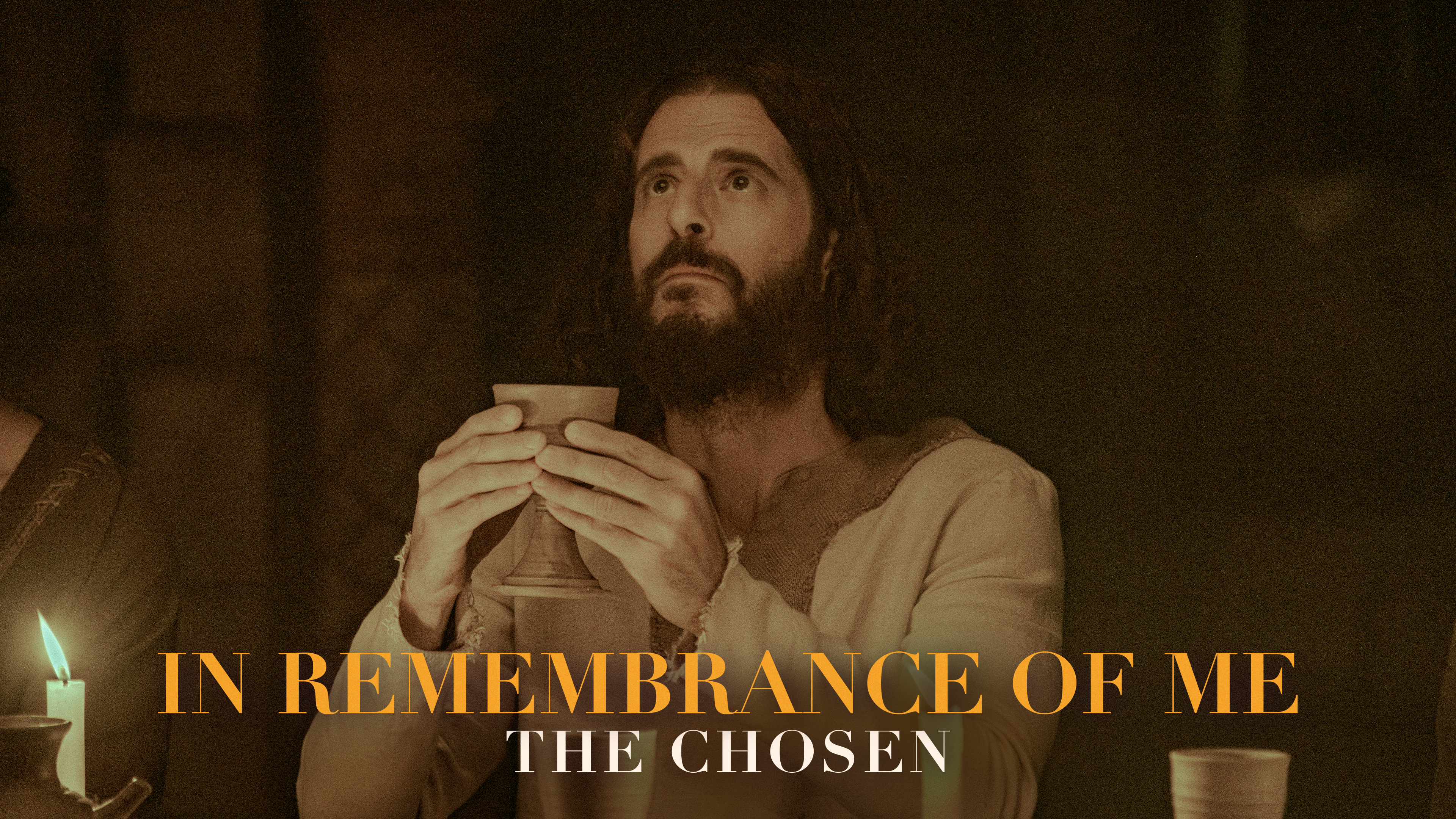
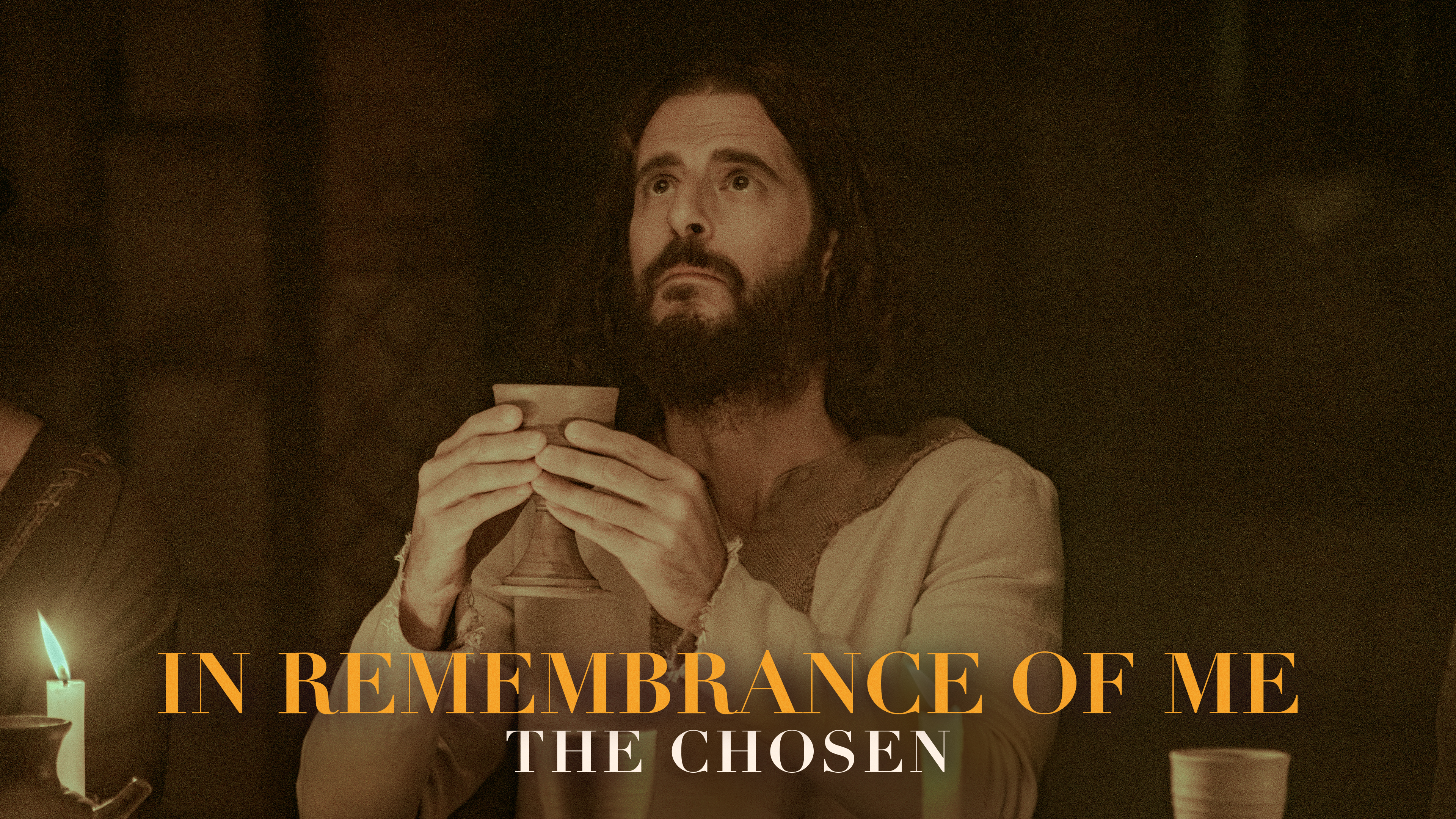
We suggest starting your extended time in Communion by showing the clip from The Chosen that’s provided with this resource — a clip that depicts the moment in the Upper Room that Jesus assigns newer and deeper meaning to the bread and the cup of Passover.
Transition to Section One
After the clip has faded out — and a moment of silence has filled the room — you could simply repeat a key phrase from the scene and the passage on which it’s based (Luke 22:14–20): “Do this in remembrance of me.” And after a brief pause, add this: “We’re such a forgetful people, aren’t we?”
Section One
For this first section of the extended time of Communion, you’re going to focus on just how forgetful we are as human beings. To start, briefly have some fun by pointing out some of the more trivial things we forget (e.g. what we wore a few days ago or when we last ate at such-and-such a place or even why we started to walk down a particular aisle in the store), and then grow a bit more serious by saying something along these lines — “Of course, there are other things we forget that are far more costly when they’re forgotten” — before you lay out some examples (e.g. a birthday, an anniversary, a tax payment, or the timing of a job interview). After you’ve done all of this, you can simply repeat a variation of the line from the Transition above — “We’re a forgetful people” — pause for a moment, and then add, “And our forgetfulness is never more costly than when we forget the much-needed and deep good that’s come to us from God through Jesus.”
Next, you’ll want to identify the cost of such forgetting. And while you can certainly explore multiple costs, because this is not a sermon, we would encourage you to focus on just two of the costs by saying something like this: “To forget God’s work through Jesus — to forget Jesus as the Bread of Life and the King of Kings and Lord of Lords — is to flirt with falling into either a profound doubt of what God is doing or an improper confidence in what we are. And neither serve us well at all, do they? When we fall into one or the other, we find ourselves falling away from God, which can only ever lead to our falling into pits of marked despair.”
Having established the two primary costs of forgetting, for purposes of where the rest of your communion meditation will go, point out the following to your listeners (in our words or your own): “The tendency to fall into profound doubt or improper confidence — all in light of spiritual forgetfulness — is as old as Israel, isn’t it? Do you remember what God said to his people just as they were entering the Promised Land — and this on the other side of his having rescued her out of slavery in Egypt? Listen to the words of Moses in Deuteronomy 8:11–20...” And then once you’ve read the passage, you can say something like this: “You hear what God is saying through Moses, right? ‘Remember, Israel. Remember me. Remember what I have done. Remember what I am doing. Remember what I have said I will do. Or you’ll fall into profound doubt — or worse yet, an improper confidence in yourselves. And it all has such power to destroy. So, remember.’”
Transition to Section Two
To shift into the next section of this extended Communion meditation, pause for just a moment after the last words of Section One before you say, “And God in his grace was kind to give Israel ways to remember. Like us, she needed ways to prod her memory along — and something with far more power than, say, a string tied around a finger or a placard on a wall. God in his kindness passed along ordinances and disciplines and entire festivals and holidays to help Israel remember — times carved out of her calendar to make sure she remembered to remember. Chief among them, Passover...”
Section Two
For this section of the Communion meditation, you’re going to focus on the power of the Passover celebration, which is established in Exodus 12. To do so, you’ll have to offer a concise look at what unfolds in Exodus 1–11. It’ll be challenging to do so in short order, but we’d encourage you not to overthink it too much, because the Exodus narrative is one of the more well-known narratives of the Bible.
You can probably even offer a blunt survey along these lines: “Most of you might know the story, but to make sure everyone does: There was a point in history where Israel was enslaved by the world power of the Ancient Near East — Egypt and her supreme leader, the pharaoh — and the people of God cried out for deliverance. And God raised up a man, Moses, through whom God could confront the pharaoh and Egypt through words and even plagues of judgment. The final plague was to strike down the first-born male of every Egyptian home, and it was what broke the back of Egypt and left the pharaoh begging Moses and all of Israel to leave — a mass exodus out of the land. And all of Israel was able to leave Egypt — every last man, woman, and child (even the firstborns) — because all of Israel had been ‘passed over’ on the night of that final plague.”
This ‘passover’ was the result of Israel having followed the instructions God had given them through Moses just a handful of days before the plague struck. From Exodus 12...
At this point, then, you’ll want to read Exodus 12:1–13 to your listeners, and after having done so, say something along these lines: “This is what God did for his people: he delivered them from slavery in such haste — so fast that their bread would have no time to rise — and he delivered them from slavery under cover of the blood of the lamb. It was the most momentous divine act of grace in Israel’s history, and it was not something to be forgotten. She needed to remember. And she would need a way to remember to remember.”
And so in those same instructions God passed along to the people through Moses, he passed along these instructions...
At this point, then, read Exodus 12:14–20, before saying the following (in our words or your own): “The people of God needed to remember their rescue. Because if they ever forgot? A certain fall into either a profound doubt of what God is doing or an improper confidence in what they themselves can do. A certain fall that would lead to a falling away — which would lead to a fall into despairing circumstances. And so God said, ‘Remember.’ God said, ‘Here — let me help you remember.’ God said, ‘I know you best remember when you do something to remember.’ God said, ‘I know you best remember in your head and heart through something as real and visceral as your stomach.’ God said, ‘Here — let me help you remember through a meal. Let me help you remember through a Passover meal.’ God said, ‘Here — take this unleavened bread. Take this bread without yeast. Take and eat bread given no power or time to rise, because your rescue was so swift.’ God said, ‘Here — take a cup of wine. And by that wine remember the blood that was smeared across the tops and sides of your doorways, so that death might pass over and by you as my people.’ Do this in remembrance of me.”
Transition to Section Three
To transition into the next section of this extended Communion meditation — in which you’ll focus on the power of the Communion celebration — you can simply say the following: “That she might not fall into profound doubt or an improper confidence, it was so vital for Israel never to forget her deliverance. Or more positively put, that she might not fall into profound doubt or an improper confidence, it was so vital for Israel always to remember her deliverance.”
After a short pause, you can add this: “That we might not fall into profound doubt or an improper confidence, it is so vital for us never to forget our deliverance. Or more positively put, that we might not fall into profound doubt or an improper confidence, it is so vital for us always to remember our deliverance.”
And after another short pause, add: “And God in his grace was kind to give us ways to remember — ordinances and disciplines to help us remember to remember. Chief among them, Communion.”
Section Three
At this point, go ahead and circle your listeners back to where everything started — not by re-showing the clip from The Chosen, but by reading the passage on which the scene is based: Luke 22:14–20.
After you’ve read the passage, we suggest you start to mirror the journey you went on in Section Two for Passover, by saying the following (in our words or your own): “This is what God has done for us through the death, burial, and resurrection of Jesus: He has delivered us from slavery to sin in such haste. He has delivered us from slavery to sin under cover of the blood of the Lamb. In Jesus’s death, burial, and resurrection, God has far-surpassed what he did in the exodus of Israel long ago in this greater exodus from sin and death.”
“This is the most momentous divine act of grace in Israel’s history and in the history of the world. This is the most momentous divine act of grace in our world. This is the most momentous divine act of grace in your world. And it is not something to be forgotten.”
“We need to remember that we might not fall into either a profound doubt of what God is doing or an improper confidence in what we are. Because such a fall would lead to a falling away — which would lead to a fall into despairing circumstances.”
“We need to remember. We need a way to remember to remember.”
“And so in an Upper Room, on the night his Son would be betrayed and handed over to be slain, God said in and through his Son, ‘Here — let me help you remember.’ He said, ‘I know you best remember when you do something to remember.’ God said, ‘I know you best remember in your head and heart through something as real and visceral as your stomach.’ God said, ‘Here — let me help you remember through a meal. Let me help you remember through a reimagined and deepened Passover meal. Through a Communion meal. The Lord’s Supper.’”
“God said, ‘Here — take this bread. Take it and remember a body swiftly handed over and slain for your deliverance. For your exodus from a land of sin and death.’”
“God said, ‘Here — take a cup of wine. And by that wine remember the blood that flowed from the brow and hands and feet and side of my Son, running down beams of wood that fashioned a cross. Take it and remember the blood of the Lamb under which you stand for your deliverance. For your exodus from a land of sin and death. Do this in remembrance of me.’”
Transition to Conclusion / Celebrating Communion
Just after you’ve said those final words of Section Three, to transition into the conclusion — which is the moment you will celebrate Communion together as a congregation — you need only say, “And so we will. We will take. We will drink. We will not forget. We will remember.”
Celebrating Communion
You’ll notice that this final section is quite short. That’s simply because we know that we serve several churches from several denominational backgrounds, and we want to create space for you to celebrate Communion in a manner that most honors your tradition and context.
Because this resource imagines a more intensive, extended celebration of Communion, if it’s honoring to your tradition and context, it might be powerful to take and eat the bread and drink from the cup(s) in unison, carefully contextualizing each act with language from all that’s been shared throughout the meditation.
Once the bread and the cups have been dispersed among your listeners you could invite all to stand and then say the following before eating the bread in unison:
“We will not forget. We remember. We remember your Son. We remember his body swiftly handed over and slain for our deliverance — for our exodus from a land of sin and death. We remember, and we rejoice, as we take and eat the bread together now.”
And then before drinking the cup in unison, you could say:
“We will not forget. We will remember. We remember your Son. We remember the blood that flowed from his brow and hands and feet and side, running down beams of wood that fashioned a cross — for our exodus from a land of sin and death. We remember, and we rejoice, as we take and drink the cup together now.”
And after a brief moment of quiet, offer a prayer of thanks.