Watch
This first episode of The Chosen begins with a two-part series disclaimer that (1) acknowledges the artistic imagination involved in its creation, and (2) stresses its faithfulness to the Scriptures. If you think it would be beneficial to the group to discuss issues related to the disclaimer, you could simply hit “Pause”—with the full disclaimer on the screen—and ask questions like: What do you think about this sort of approach to telling the story of Jesus? What might be helpful about it for long-time believers, and for those who have yet to believe? Are there any dangers in such an approach? And because both “pillars” of the disclaimer lead to a call to action on the viewer’s part—a commitment to read the gospels even as they watch the show—either here at the start, or later near the end of this first gathering, you could invite the group to discuss ways you all can regularly engage with the show’s source material (Matthew, Mark, Luke, and John) in the days to come.
Discuss
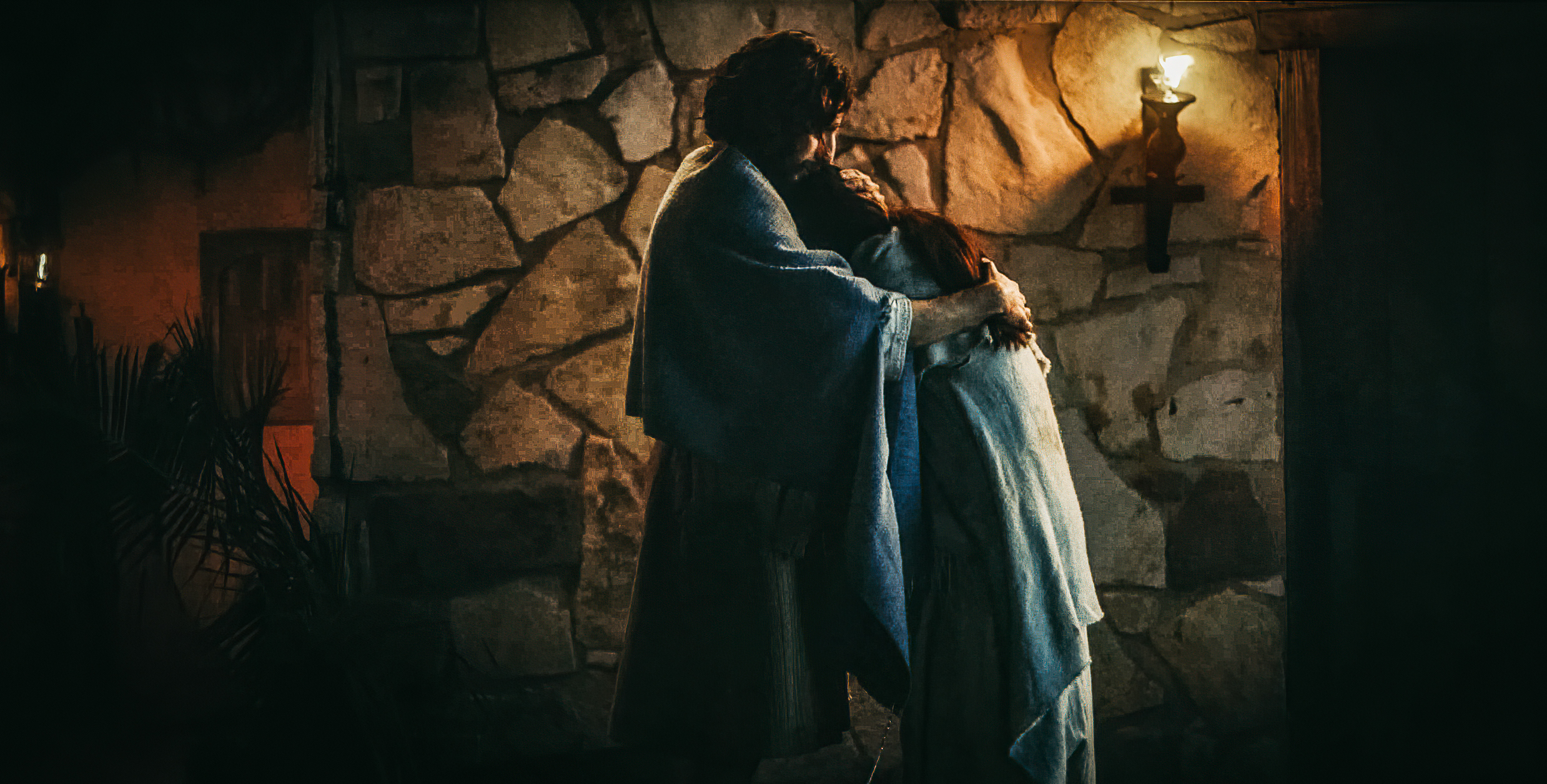
The creators of The Chosen imagine what life might have been like for Mary Magdalene based on Luke 8:1-2. Take a moment to read the passage. In just a word or a phrase, how do you think Mary would have identified herself to others? And how would others have identified her in just a word or a phrase?
Let’s list the additional individuals (and even entire people groups) that we’re introduced to, and for each one, how do you think others would generally define them in a word or phrase?
You’ll want to make sure they explore in particular the following individuals: Nicodemus, Matthew, Simon, Gaius, and Quintus. Beyond that, if need be, help them recall the following groups: Rome, the Jews, the Pharisees, fishermen, and the people of the “Red Square.”[2]
Let’s go back to Mary, who can serve as a stand-in for everyone we’ve listed so far. We see how she’s been identified by herself and others. But in a word or a phrase, what is her deeper and truer identity—the one her father spoke to her as a child and is reaffirmed by Jesus?
After the group has made its way through this question, you might want to take a moment for someone to read Isaiah 43:1.[3]
Let’s shift to us. What are some of the identities, captured in words and phrases, that we often think most define us—and what has life been like as we’ve lived under and according to these identities?
We’ve been shown our deeper and truer identity—in this episode and maybe even before—but we are prone to forget it. How can we hold fast to our deeper and truer identity as “his”?
Pray
Here are two questions to guide your group’s closing prayer:
If you were to offer a word of thanks to God for something that comforted you in this episode, what would it be?
If you were to ask God’s help in living life in a new way in light of this episode, how would you sum up this new way of life?